

The combination of lemon and baking soda is one of the most shared home recipes on the internet. You may have seen it compared with chemotherapy, often with very large numbers attached.
That comparison is not true. There is no scientific evidence that lemon and baking soda can replace any medical treatment, and no health organization is hiding such a secret. In this article we look at what this mixture really offers and how to use it sensibly.
What Lemon and Baking Soda Can Offer
Lemons are rich in vitamin C, flavonoids, and other plant compounds. Some of these compounds have been examined in laboratory studies on cells, which is where many of the dramatic online claims come from. Results in a laboratory dish do not show that eating lemons has the same effect in the human body. Baking soda is often added because it is alkaline and softens the sour taste of the juice.
Lemon has a wide range of everyday uses. Many people find its scent and taste refreshing, and a glass of lemon water is a pleasant way to start the day when you feel stressed or tired.
As part of a balanced diet rich in fruits and vegetables, lemons may also help support healthy blood pressure, and lemon juice has traditionally been used in folk practice for its mild antibacterial properties.
However, the most widespread claim, that this mixture fights as many as 12 kinds of serious illness and works thousands of times better than the medicines used in hospitals, has never been shown in studies on people.
The stories behind this claim are personal accounts of people who drank lemon juice with a spoon of baking soda. A personal account is not proof. Anyone who is receiving medical treatment should ask their doctor before adding this or any other home recipe, because it must never replace the treatment itself.
A note on the lemons: choose organic lemons when you can, or wash regular lemons thoroughly, especially if you plan to use the peel.
Note: There is no written medical proof that supports the use of the lemon and baking soda mixture in medical therapy.
See also: Herbal Remedies That You Must Have At Home
The Lemon and Baking Soda Formula
The versions of this recipe that circulate online are usually based on these ingredients:
- maple syrup,
- honey and molasses,
- organic lemon and
- baking soda.
One popular book on baking soda describes a single person who was seriously ill and decided to try it on his own.
On the first day, he took 1 spoon of baking soda and 1 spoon of molasses in a glass of water, once a day. He repeated this for 3 days.
According to the account, the pH level of his saliva was 7.0 and the pH level of his urine was 7.5.
In the first 5 days, he took 1 spoon of the mix 2 times a day. From the 6th to the 10th day, he took 2 spoons 2 times a day.
After 10 days, his urine pH was measured at 8.5. There were also side effects, such as a headache and night sweating.
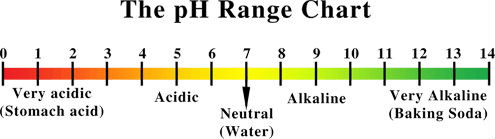
The book goes on to link these readings with better test results. This is one uncontrolled story, not a clinical study. Urine pH changes with what you eat and drink, and it does not show that an illness has improved. We do not recommend copying this routine, as these amounts of baking soda are much higher than what is considered safe for home use.
5 Ways to Protect Your Skin From Sun Damage
Another Home Recipe With Maple Syrup
Another homemade recipe that is shared online is a mixture of maple syrup and baking soda, in a ratio of three parts syrup to one part baking soda.
The preparation is the following: the maple syrup is heated up and the baking soda is added while stirring constantly, until it dissolves completely.
The versions found online suggest taking several spoons of it a day for 10 days. That is a large amount of baking soda and sugar, and we do not advise it. If you want to try the taste, keep to a very small amount on occasion.
Regardless of the popularity of lemon and baking soda, it is necessary to point out that baking soda raises the pH level, and too much of it can cause metabolic alkalosis and electrolyte imbalance. It is also high in sodium, so it can lead to fluid retention and affect the heart’s functioning and blood pressure.
Therefore, before you start using either of these two home recipes, a consultation with your doctor is necessary, especially if you have a heart or kidney condition, high blood pressure, or take any medication.
Sources:
- Instituto de Ciencias de la Salud, L. L. C. 819 N. Charles Street Baltimore, MD 1201
- Planet Today
- AACR Journals
- Organic Jeng
Additional Sources:
This article is for informational purposes only and is not a substitute for professional medical advice, diagnosis, or treatment. Always talk to your doctor about any health concern.