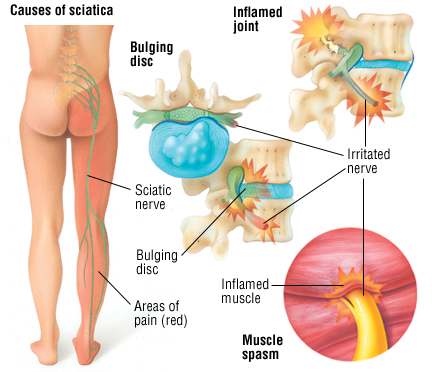
Sciatica is a condition of the longest nerve in the body – the sciatic nerve. People with sciatic pain describe it as a sharp or numb pain that starts in the back, goes all the way through the leg, and reaches the foot. This condition can sometimes cause unpleasant twinges and pressure even with the slightest moves.
Many people will experience this condition at some point in their lives. The symptoms of sciatic pain are very similar to lower back pain and leg cramps, and that’s why the two are often confused. A doctor can tell you what is really behind the pain.
The pain can be different from person to person. Some experience mild aches and feelings of numbness, while others experience a sharp and very painful sensation that usually affects one side of the body at a time.
Many people use painkillers like ibuprofen to relieve the pain. These OTC drugs can be effective, and your doctor or pharmacist can advise you on how to use them safely. Alongside them, a few natural approaches may help you ease the discomfort and the inflammation associated with sciatica.
Natural Approaches for Sciatic Pain
1. Chiropractor
Chiropractic is a popular form of alternative medicine. There is no firm scientific study that confirms that visiting a chiropractor can improve sciatica, but there are many people who say they have experienced improvement after a couple of sessions. Many people also find that it helps them reduce stress and improve mobility and flexibility.
2. Acupuncture
This is another form of alternative medicine, but unlike chiropractic, acupuncture uses special thin needles, which are inserted into the skin. By placing these needles at certain points on the body, acupuncturists believe that they can improve the flow of energy in the body and help people ease sciatic pain. It usually takes a few sessions before people notice the first results, and results vary.
3. Ice Packs
If you are looking for a simple way to ease the pain, you can try applying ice packs to the affected area. Leave the ice packs on for around 20 minutes, take a break for two hours, and repeat the procedure until you start feeling better.
4. Switch Temperatures
Truth be told, ice packs can provide only short-term effects. The reason is simple – the sciatic nerve is the largest in the body and it is located deep inside the body. Ice packs affect only the surface layers. That’s why some experts suggest alternating temperatures. After applying ice packs, take a hot bath. This change may support your blood flow and reach the deeper layers too. In addition, you can add some essential oils or herbs to the bath.
5. Massage
Massage is a relaxation technique known since ancient times. A proper massage can relax the muscles, ease tension, and support blood flow. Essential oils used for massage and aromatic candles can add to the relaxing effect.
Watch: Short Video Exercises for Sciatic Nerve Pain
6. Yoga
You have probably seen how flexible yoga practitioners are, but when we talk about using yoga for sciatic pain, we mean practicing mild stretches. People with sciatic pain often rest the whole time, but gentle physical activity is usually recommended. Regular, gentle movement can help you increase your flexibility and mobility.
7. Sleep
Lack of sleep can have both short-term and long-term negative effects on your health. On the other hand, healthy, quality sleep supports the immune system, concentration, and energy levels. A good night’s sleep also gives your body and nerves time to rest. And whenever you find a little free time, take a nap.
8. Herbs and Oils
We have already mentioned essential oils and herbs for massage, but some people also use them in the form of supplements, capsules, and teas. If you are planning to take them orally, remember to ask your doctor whether they can cause side effects when combined with any medication you take. The following is a short list of herbs traditionally used for nerve discomfort and inflammation: turmeric, Jamaican dogwood, devil’s claw, arnica, willow, lavender, and licorice.
9. Alexander Technique
The Alexander Technique is an educational process that helps people learn how to keep a correct body posture. According to many people, proper posture may help with migraine pain, back pain, and neck pain, and it may help with sciatic pain too.
10. Diaphragmatic Breathing
Diaphragmatic breathing is another technique that some people find useful for sciatic pain. This technique encourages deep, complete breathing, which many people find relaxing and energizing.
Keep in mind that most of these natural approaches for sciatic pain have not been scientifically proven, although many people say they have felt a positive impact. If your pain is severe, lasts a long time, or comes with weakness or numbness, see your doctor before trying any of them.
11 Easy Exercises That May Help Ease Sciatic Nerve Pain
This article is for informational purposes only and is not a substitute for professional medical advice, diagnosis, or treatment. Always talk to your doctor about any health concern.